

3D printing ( also known as Additive Manufacturing(AM) ) is one of the exciting developments in the modern age. The technology mainly involves creating physical objects from their geometrical representation (3D model data) through successive addition of a material. The applications of 3D printing are increasingly growing, and the process now has applications in; agriculture, healthcare, automotive industry, locomotive industry and aviation industries. Today, 3D printing technologies are also available for the construction industry, and they are redefining several aspects of construction. In the following sections, we are going to look at the some of the applications of the 3D printing construction.
3D printing in Architecture
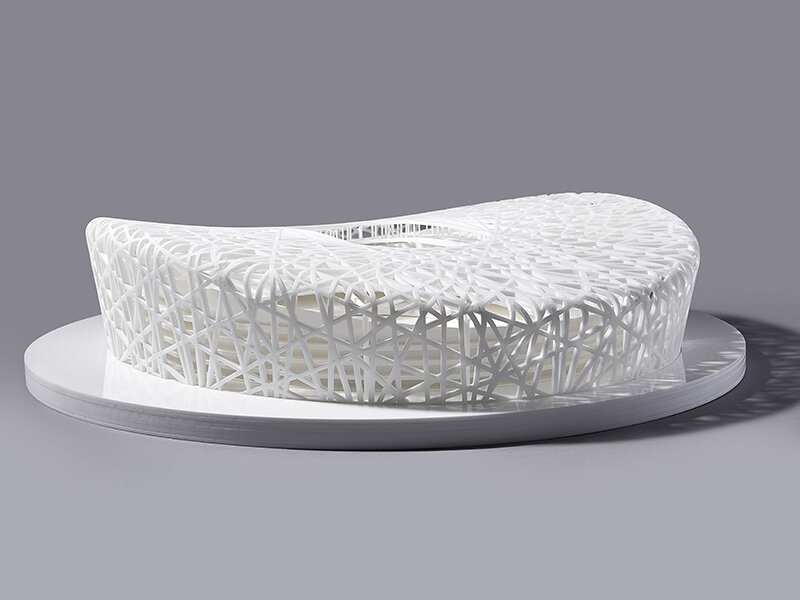
Architects have long sought to impress their clients with amazing artistic impressions and models. 3D printing is now a game changer which has created a way for clients to physically see and appreciate the vision of the Architect. With 3D printing, one can create beautiful miniature models of their projects as shown in the photo below. The models can be printed out of; ABS (Acrylonitrile Butadiene Styrene) , nylon and resins.
3D printing buildings
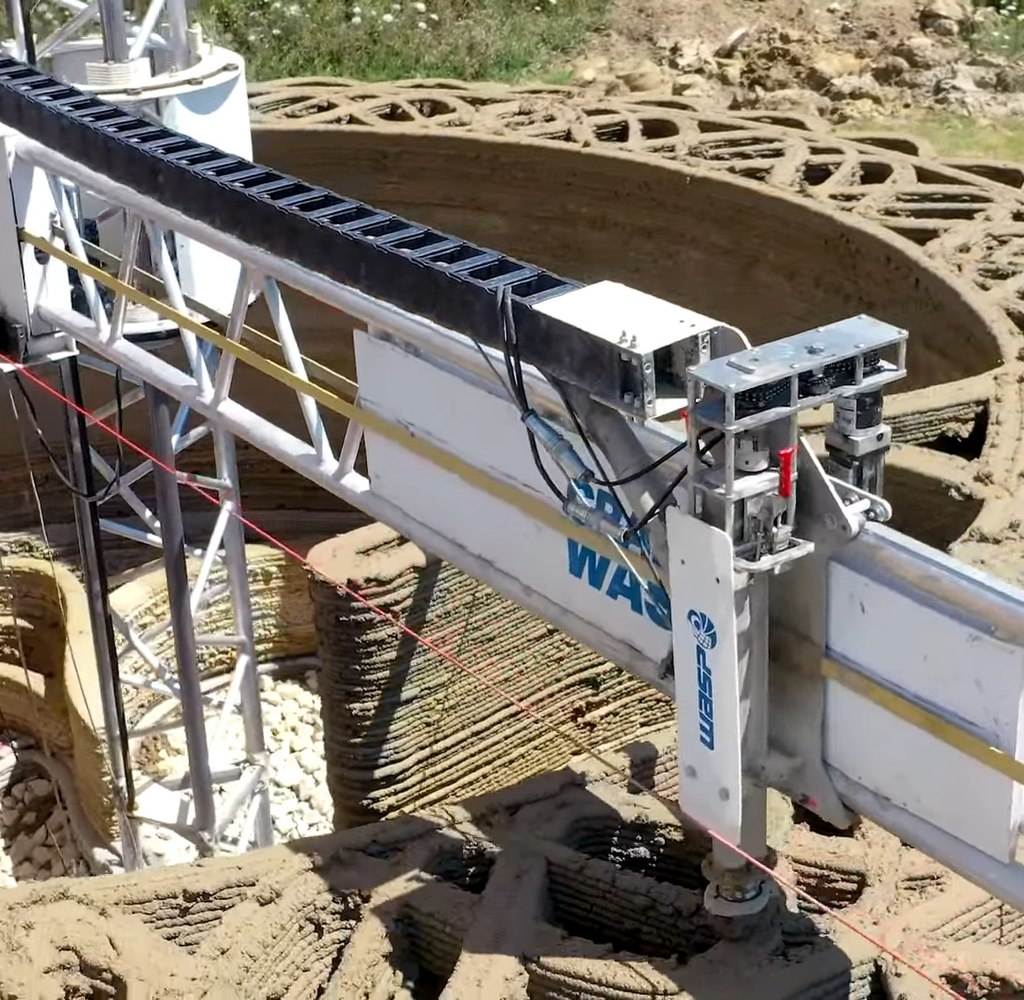
3D printing technology has had major developments to the extent that it is possible to print an entire house. 3D printing as construction solution offers lower construction cost and reduced material waste as well as reduced construction time. 3D printing also has an advantage of constructing various design shapes which are not possible traditionally. As an example, Kamp C ( a Belgium Company) successfully constructed a house using a 3D printer (gantry printer) within 3 months with an actual printing time of 15 days. As shown in the video below, the construction of the house was done by pumping concrete via hoses through the extrusion head of the printer. The result of the process was a visually stunning house with special walls designed to avoid thermal bridges.

References
Allouzi, R., Al-Azhari, W., & Allouzi, R. (2020). Conventional Construction and 3D Printing: A Comparison Study on Material Cost in Jordan. Journal of Engineering, 2020, 1–14. https://doi.org/10.1155/2020/1424682
Duda, T., & Raghavan, L. V. (2016). 3D Metal Printing Technology. IFAC-PapersOnLine, 49(29), 103–110. https://doi.org/10.1016/j.ifacol.2016.11.111
Shahrubudin, N., Lee, T., & Ramlan, R. (2019). An Overview on 3D Printing Technology: Technological, Materials, and Applications. Procedia Manufacturing, 35, 1286–1296. https://doi.org/10.1016/j.promfg.2019.06.089
YOU MAY ALSO LIKE TO READ
- A Simple Guide to Runoff ManagementWhether you are working on a small infrastructure project or a large one, rainwater (runoff) is always going to be an issue. That’s why runoff management is a critical part of sustainable land development and environmental protection. As more parts of the world become urbanized and climate patterns continue to… Read more: A Simple Guide to Runoff Management
- A Billion Dollar Problem: What Construction Waste Management Means for the IndustryIt is estimated that nearly 30% of the world’s solid waste comes from construction and demolition (C&D) activities. This includes everything from broken concrete, wood, metal, drywall, bricks, glass, plastics, asphalt, to packaging materials. Most of this waste ends up in landfills, contributing to environmental degradation and increasing costs for… Read more: A Billion Dollar Problem: What Construction Waste Management Means for the Industry
- 5000 Years of Computing: Our Engineering Journey to Quantum ComputingFor over a millennium, human ingenuity has been entwined with the development of tools to aid computation. From the use of the abacus beads to the barely comprehensible entanglement of quantum bits, computing has evolved not only in speed and complexity but also in the way engineers use it to… Read more: 5000 Years of Computing: Our Engineering Journey to Quantum Computing