


Waterproofing is one of the oldest techniques in construction used to make buildings last. The use of waterproofing can be traced back to 13000 years ago with people using it to protect their shelters against rain and storms. Today, waterproofing is still one of the best techniques for creating sustainable and durable structures.
Waterproofing involves the use of either special mechanisms or materials to surfaces protect against penetration by water. It is therefore any special aspect of construction as many of the materials used in construction are porous and can absorb water leading to a number of problems such as cracks and structural deterioration.
Types of Waterproofing
Since the use of waterproofing depends on a needs basis, different types of waterproofing are available to help in different situations. Below are the main types of waterproofing:
- Membrane Waterproofing: This includes materials like bituminous membranes, EPDM, PVC, TPO, CPE, APP and HDPE membranes, which are used to create a barrier against water on roofs, foundations, and other surfaces.


- Cementitious Waterproofing: Cementitious coatings, integral waterproofing compounds, crystalline waterproofing, and liquid-applied cementitious membranes are applied to concrete surfaces to prevent water infiltration.
- Liquid Waterproofing: Liquid materials like polyurethane, acrylic, and silicone membranes are applied as a liquid coating to create a waterproof layer on various surfaces.


- Sheet Waterproofing: Rubberized asphalt sheets, modified bitumen sheets, and thermoplastic sheets are used in roofing and below-grade applications to prevent water penetration.
- Injection Waterproofing: This involves injecting materials like polyurethane or epoxy into cracks and joints to seal them and prevent water intrusion.
- Waterproofing Paints and Sealants: Waterproof paints and water-repellent sealants are applied to surfaces like walls, ceilings, and joints to make them water-resistant.
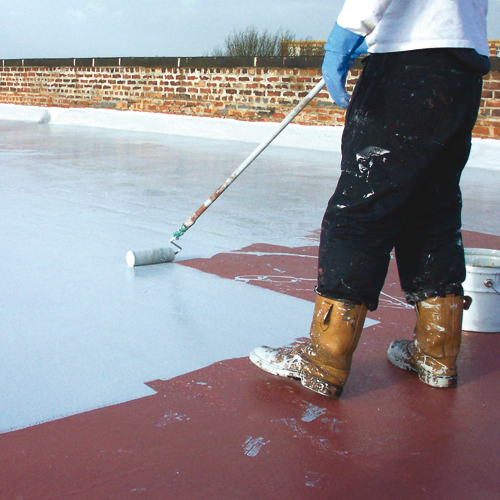

Waterproofing Superstructure
When it comes to the superstructure, waterproofing can be applied to the roof, ceiling, terrace, and balcony slabs. The purpose of this kind of waterproofing is to prevent water infiltration and protect the underlying structure from moisture damage. Depending on the cost and nature of the structure, different kinds of waterproofing can be applied, such as membrane waterproofing, liquid waterproofing, or cementitious waterproofing, to ensure the longevity and integrity of the building.
A good example of this kind of waterproofing involves the utilization of Atactic Polypropylene Polymer (APP) membranes. These membranes are employed to waterproof exposed roof slabs and concrete balconies, providing a robust shield against water infiltration and significantly enhancing their durability.
Waterproofing Basement and Substructure
The substructure of a building contains a number of elements such as retaining walls, slabs, and plinth walls, all of which may need to be waterproofed. If parts of the substructure, such as basement walls, are left unprotected, it can lead to problems such as water infiltration, mold growth, structural deterioration, and damage to interior finishes.
To protect these kinds of structures, one can use waterproofing materials such as cementitious coatings, liquid-applied membranes, or sheet membranes that can create a durable and impermeable barrier against water penetration. This kind of waterproofing is suitable for basements, foundations, and below-grade structures.

_looking_South_(14458834143).jpg)
Waterproofing Water retainment structures
Structures intended to contain and retain water such as water tanks, swimming pools, and septic tanks also need to be waterproofed to protect them against leaks, water seepage, and moisture damage. One can use waterproofing materials like rubberized asphalt membranes, EPDM liners, or concrete waterproofing admixtures to create a watertight seal that prevents water from escaping or infiltrating these structures, hence ensuring their integrity.
When it comes to swimming pools, the two common methods are pool liners, made of vinyl or PVC, and epoxy pool paints, which create a waterproof coating on pool surfaces. Liners offer ease of installation and come in various designs, while epoxy paints provide chemical resistance and durability. The choice depends on the pool’s construction and budget. Regular maintenance also ensures long-term waterproofing performance.
Waterproofing different materials
Waterproofing varies based on the construction materials used. Be it steel, concrete, timber, or masonry, each demands a tailored approach due to their unique traits and potential issues like corrosion in steel or rot in timber. The choice of waterproofing method is crucial for long-term durability and functionality.
Concrete structures, for instance, are susceptible to water infiltration through capillaries and microcracks. To address this, cementitious waterproofing coatings or admixtures can be applied during construction to enhance the concrete’s impermeability.
On the other hand, steel elements are prone to corrosion when exposed to moisture, necessitating specialized coatings or rust-inhibiting materials to prevent rust formation and structural degradation.
Timber, while a versatile building material, requires careful consideration and treatment to guard against rot and decay caused by prolonged exposure to water.
Lastly, masonry structures may benefit from sealants and coatings that create a protective barrier against water penetration, preserving the integrity of the brick or stone surfaces.
Choosing waterproofing
To choose the best waterproofing method, consider the environment, project cost, and the construction material. These factors will help you make an informed decision and ensure the longevity of your construction project.
When selecting a waterproofing approach, evaluate climate conditions, rainfall, and humidity. Stay within budget while ensuring performance matches your project’s needs. Also don’t forget to consider the construction material.
For more updates, like our Facebook Page.
Please don’t forget to subscribe to our newsletter!
YOU MAY ALSO LIKE TO READ
- A Simple Guide to Runoff ManagementWhether you are working on a small infrastructure project or a large one, rainwater (runoff) is always going to be an issue. That’s why runoff management is a critical part of sustainable land development and environmental protection. As more parts of the world become urbanized and climate patterns continue to… Read more: A Simple Guide to Runoff Management
- A Billion Dollar Problem: What Construction Waste Management Means for the IndustryIt is estimated that nearly 30% of the world’s solid waste comes from construction and demolition (C&D) activities. This includes everything from broken concrete, wood, metal, drywall, bricks, glass, plastics, asphalt, to packaging materials. Most of this waste ends up in landfills, contributing to environmental degradation and increasing costs for… Read more: A Billion Dollar Problem: What Construction Waste Management Means for the Industry
- 5000 Years of Computing: Our Engineering Journey to Quantum ComputingFor over a millennium, human ingenuity has been entwined with the development of tools to aid computation. From the use of the abacus beads to the barely comprehensible entanglement of quantum bits, computing has evolved not only in speed and complexity but also in the way engineers use it to… Read more: 5000 Years of Computing: Our Engineering Journey to Quantum Computing