


We often think of dams as massive walls holding back rivers and while that’s true, there is a lot more going on beneath the surface. Dams are some of the most important and fascinating structures innovated by human civilization. They help us control water, generate energy, grow food, and protect lives. But have you ever wondered why there are so many different kinds of dams? Or what makes one dam better suited to a location than another?
In this article, we are are dive into what dams are, and what they do as well as the different types you will find around the world.
What is a Dam?
At its simplest, a dam is a physical barrier across a river or stream that holds back water. While this definition is simple, there is a whole range of purposes for constructing dams such as:
- Storing water for drinking or farming
- Preventing floods
- Producing electricity
- Supporting navigation
- Even creating spots for fishing or boating
Designing a dam is also no easy task. Engineers have to consider a number of factors including; the landscape, the materials available, and how much water it needs to hold as well as the possible impact it might have on the surrounding environment.
Why So Many Dam Designs?
Not all rivers or their surrounding landscapes are created same. That is why there’s no one-size-fits-all when it comes to dams. Because of this engineers look at several factors when deciding on the best dam for a location such as:
- The purpose of the dam: Is it for water supply, irrigation, electricity generation , transportation or just flood control.
- Topography: Is it a narrow gorge or a wide valley?
- Foundation Strength: Can the ground support a heavy concrete structure?
- Water Flow: How much water comes through and how fast?
- Materials Nearby: Is it cheaper to use concrete, rock, or compacted earth?
- Budget & Maintenance: What’s realistic long-term?
- Earthquake Risk: Is the area prone to seismic activity?
Here Are Six Types of Dams and Examples
1. Gravity Dams
A gravity dam uses its sheer weight to resist the pressure of water. It’s big, bold, and built to stay put. Its shape wide at the bottom, and narrower at the top to help it push back against the water. The gravity dam is best suited for strong, rocky foundations and narrow to moderate valleys. The common materials for gravity dam are concrete and stone masonry.
Example:


2. Arch Dams
An arch dam curves upstream. This design enable it to cleverly use the natural strength of an arch to transfer water pressure into the canyon walls which makes it lighter and more material-efficient than a gravity dam. The arch dam is narrow gorges with strong rock walls.
Example:


3. Buttress Dams
These dams have a sloped front face supported by a series of angled supports called buttresses. These supports help distribute the water pressure down to the foundation. Buttress dams are suited for wide valleys where building a full gravity would be too expensive or heavy for the ground. They are often constructed from reinforced concrete.
Example:


4. Embankment Dams
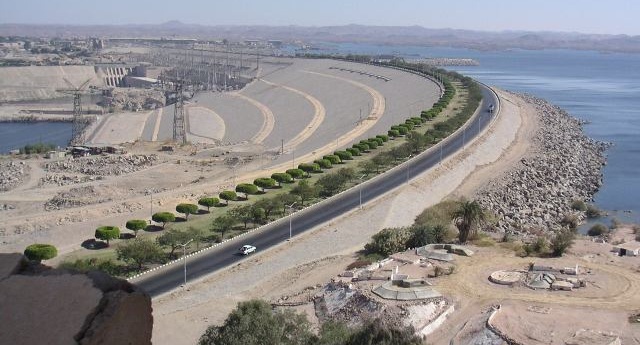
Made mostly from earth or rock, this type of dam relies on its bulk and wide base to resist water pressure. It often has a waterproof core or membrane to stop leaks. These dams are constructed from compacted earth , rock or both
Example:

5. Diversion Dams
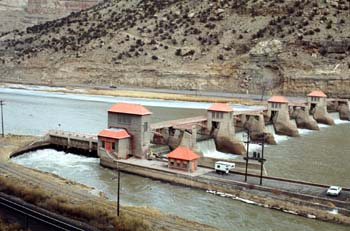
Rather than storing lots of water, a diversion dam raises the river level just enough to reroute water into a canal or pipeline for irrigation, drinking, or electricity generation. Diversion dams are suitable for agricultural areas or areas that need water diversion downstream. Depending on side, these dams can be constructed from concrete, masonry or even timber for smaller systems.
Example:


6. Detention Dams
These dam aren’t about storing water for long-term use but for flood control. They hold back water during heavy rain or snowmelt and releases it slowly to prevent downstream flooding. Detention dams are suitable for flood-prone urban and rural areas. These dams can be made from concrete, earth and rock.
Example:

.jpg)
Please don’t forget to subscribe to our newsletter!
YOU MAY ALSO LIKE TO READ
- A Simple Guide to Runoff ManagementWhether you are working on a small infrastructure project or a large one, rainwater (runoff) is always going to be an issue. That’s why runoff management is a critical part of sustainable land development and environmental protection. As more parts of the world become urbanized and climate patterns continue to… Read more: A Simple Guide to Runoff Management
- A Billion Dollar Problem: What Construction Waste Management Means for the IndustryIt is estimated that nearly 30% of the world’s solid waste comes from construction and demolition (C&D) activities. This includes everything from broken concrete, wood, metal, drywall, bricks, glass, plastics, asphalt, to packaging materials. Most of this waste ends up in landfills, contributing to environmental degradation and increasing costs for… Read more: A Billion Dollar Problem: What Construction Waste Management Means for the Industry
- 5000 Years of Computing: Our Engineering Journey to Quantum ComputingFor over a millennium, human ingenuity has been entwined with the development of tools to aid computation. From the use of the abacus beads to the barely comprehensible entanglement of quantum bits, computing has evolved not only in speed and complexity but also in the way engineers use it to… Read more: 5000 Years of Computing: Our Engineering Journey to Quantum Computing