

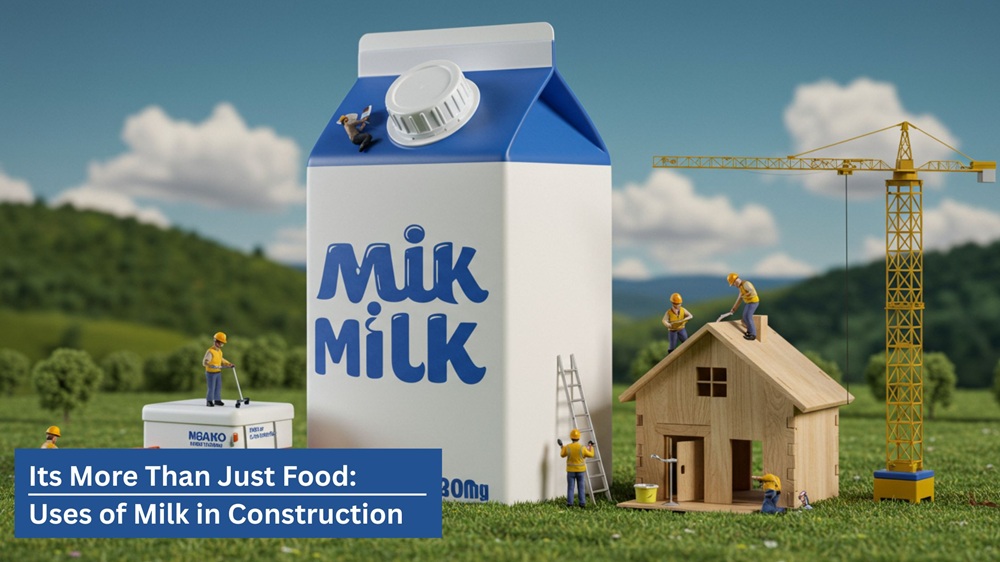
When you think of a tall cold glass of milk, your mind probably goes to breakfast cereal, dunking cookies, or maybe adding a splash to your coffee. It’s a staple in our kitchens, a source of calcium and protein. But what if I told you that the same natural ingredients that nourish our bodies could also be used to paint our walls, glue our furniture, and even insulate our homes?
For centuries, and even today with modern innovations, milk has been a surprisingly versatile and sustainable resource in the world of construction. In this article, we are going to break down how this humble source becomes a construction material.
First of all, What Is Milk?
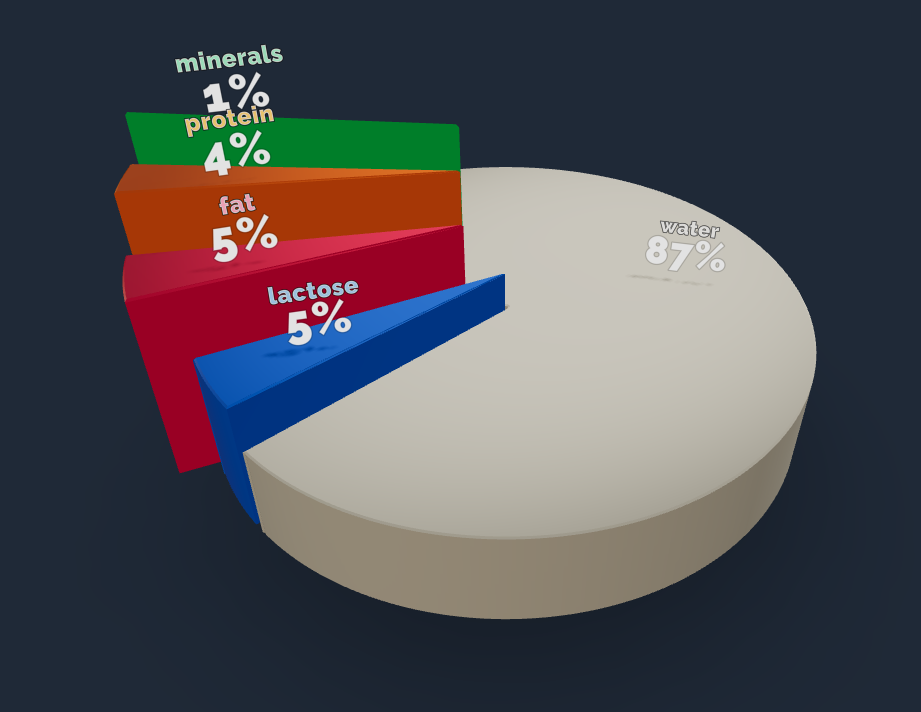
Milk is mostly water, but it’s packed with fats, sugars (lactose), and, most importantly for our purposes, proteins. The two main proteins in milk are casein and whey.
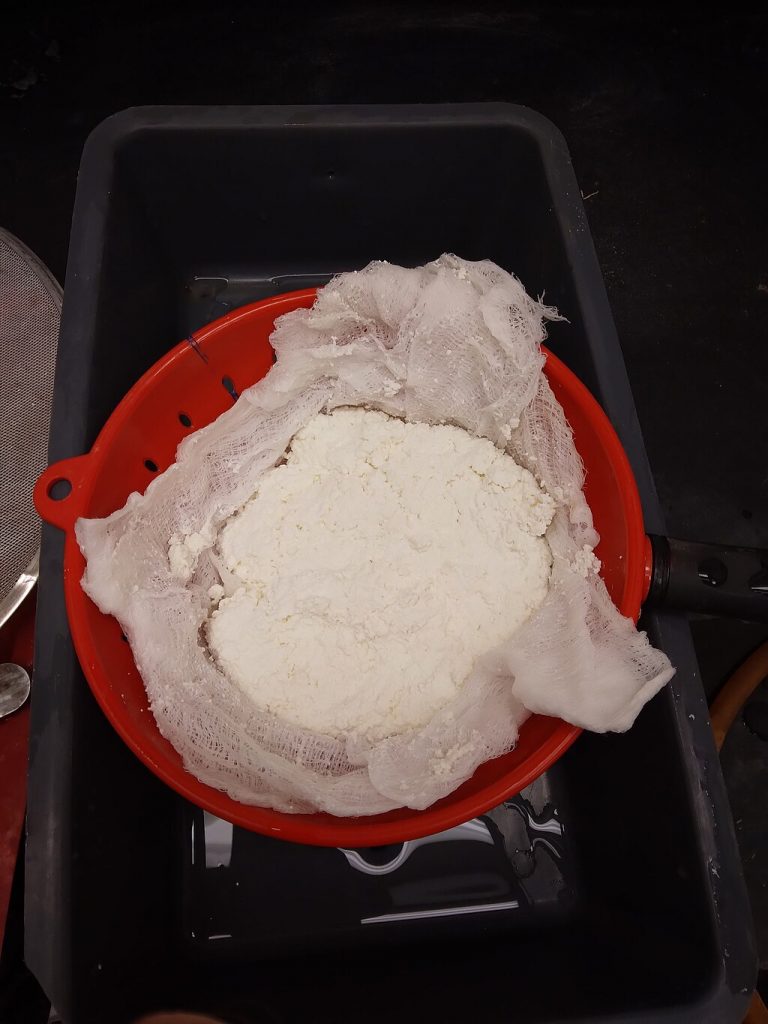
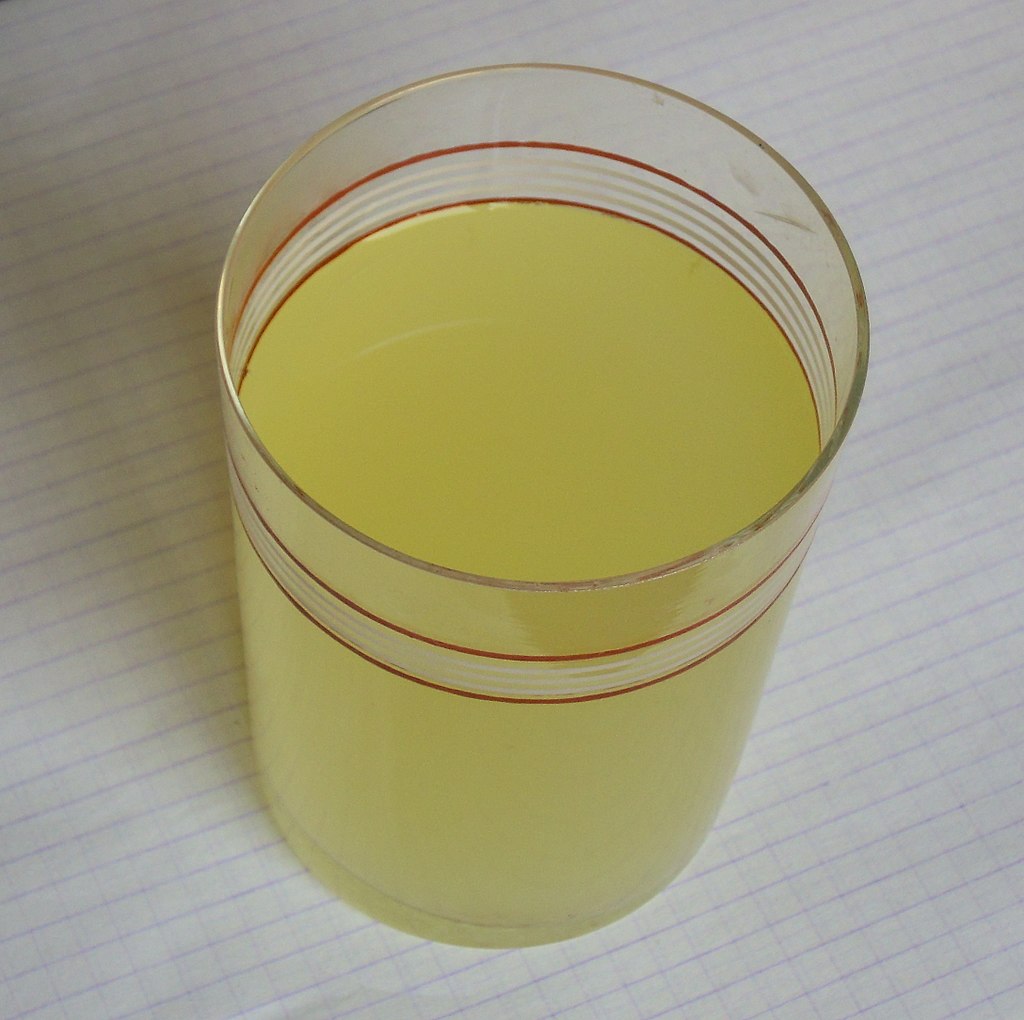
When milk sours or is treated with an acid (like in cheese making), it separates. The solid clumps that form are the curds, which are rich in casein. The watery liquid left behind is the whey. These two proteins are the secret ingredients that give milk some uses in construction.
_Precipitation.jpg)

Uses of Milk Components in Construction
Now for the fun part. How exactly do we go from a protein in a liquid to a durable material? Here are three incredible ways milk can be used in building and finishing.
1. Milk Paint (Casein-Based Paint)
Milk paint is one of the oldest known paints, with origins tracing back to ancient civilizations including Egypt and Rome. Its primary component is casein, a protein naturally found in milk that acts as a powerful binder. In terms of use some sustainable materials on a project, you use this paint to make project sign posts as an example.
Its benefits: It is non-toxic and biodegradable.
2. Casein Glue
Before synthetic adhesives, builders relied on casein glue, a remarkably strong and water-resistant adhesive derived from milk. It was widely used in woodworking.
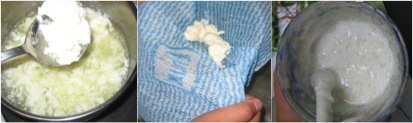

Applications and benefits:
- Historical craftsmanship: Casein glue was a go-to in traditional joinery and fine woodworking.
- Durability: Despite being naturally derived, casein glue forms strong bonds and resists aging.
- Toxin-free alternative: While synthetic adhesives often contain formaldehyde or petrochemicals, casein glue offers a safer, biodegradable option for artisans and restorers.
3. Whey-Based Insulation and Composite Panels
Unlike casein, whey was historically viewed as waste. However, modern material science has found innovative ways to repurpose it into high-performance construction products.
Researchers have developed methods to process whey proteins, combining them with natural fibers and subjecting them to heat and pressure. The outcome is composite panels that are rigid, moisture-resistant, fire-resistant, and suitable for use in insulation or as alternatives to particleboard.
Why it’s innovative:
- Circular economy: This approach diverts waste from the dairy industry into valuable construction inputs.
- Low-toxicity: Whey-based panels are free from the formaldehyde and other volatile compounds common in traditional boards.
- Sustainability: These materials support green building practices by reducing both emissions and material waste.
Conclusion
So, the next time you pour a glass of milk, take a moment to appreciate its hidden potential. It’s a testament to nature’s ingenuity that something so simple can nourish us, while its core components can be transformed into materials that shelter us.
References
Chen, H., Zhou, L., & Chen, L. (2013). Foam-like materials based on whey protein isolate. European Polymer Journal, 49(10), 3387–3391. https://doi.org/10.1016/j.eurpolymj.2013.07.019
D V Satyanarayana, Sana & Mamidala, Lavanya & Basha, Shaik & Reddy, Y. (2023). The Casein and Its Usages. 367-375. 10.5281/zenodo.7725784.
Hustad, G. O., Richardson, T., & Amundson, C. H. (1970). Polyurethane foams from dried whey. Journal of Dairy Science, 53(1), 18–24. https://doi.org/10.3168/jds.S0022-0302(70)86142-2
Wick, A. (2021, October 30). Casein glue. AprilWick.com. Retrieved June 18, 2025, from https://aprilwick.com/casein-glue
Please don’t forget to subscribe to our newsletter!
YOU MAY ALSO LIKE TO READ
- A Simple Guide to Runoff ManagementWhether you are working on a small infrastructure project or a large one, rainwater (runoff) is always going to be an issue. That’s why runoff management is a critical part of sustainable land development and environmental protection. As more parts of the world become urbanized and climate patterns continue to… Read more: A Simple Guide to Runoff Management
- A Billion Dollar Problem: What Construction Waste Management Means for the IndustryIt is estimated that nearly 30% of the world’s solid waste comes from construction and demolition (C&D) activities. This includes everything from broken concrete, wood, metal, drywall, bricks, glass, plastics, asphalt, to packaging materials. Most of this waste ends up in landfills, contributing to environmental degradation and increasing costs for… Read more: A Billion Dollar Problem: What Construction Waste Management Means for the Industry
- 5000 Years of Computing: Our Engineering Journey to Quantum ComputingFor over a millennium, human ingenuity has been entwined with the development of tools to aid computation. From the use of the abacus beads to the barely comprehensible entanglement of quantum bits, computing has evolved not only in speed and complexity but also in the way engineers use it to… Read more: 5000 Years of Computing: Our Engineering Journey to Quantum Computing