

AI (Artificial Intelligence) became mainstream as recently as 2023. However, its introduction has come with a number of applications and tools. The architecture industry is an example of these applications. Thanks to generative AI, architectural design can now be improved by simplifying workflows, enhancing creativity and making smarter designs.
In this article, we will look at the top AI tools for architectural design. Whether you are a solo designer or part of a large team, these tools can elevate your work.
Top Five AI Tools for Architectural Design
1. Autodesk Forma
Autodesk’s Forma is one of the top tools for AI supported architectural design. Autodesk Forma is a cloud-based software platform developed to support architects and urban designers during the early stages of design, particularly pre-design and schematic design. It integrates AI-powered tools, real-world data, and environmental analysis to streamline conceptual development and facilitate informed decision-making.
Key features:
- Real-World Contextual Setup
- Real-world context modeling
- Instant massing generation
- Real-time impact analysis
- Sun, wind, noise studies
- Living quality optimization
- Sustainability metrics
- Revit/Rhino/Dynamo integration
- Cloud-based collaboration
Best for: Designers aiming to meet ESG standards and reduce carbon footprints.
Website:https://www.autodesk.com/products/forma
2. Arkdesign.ai
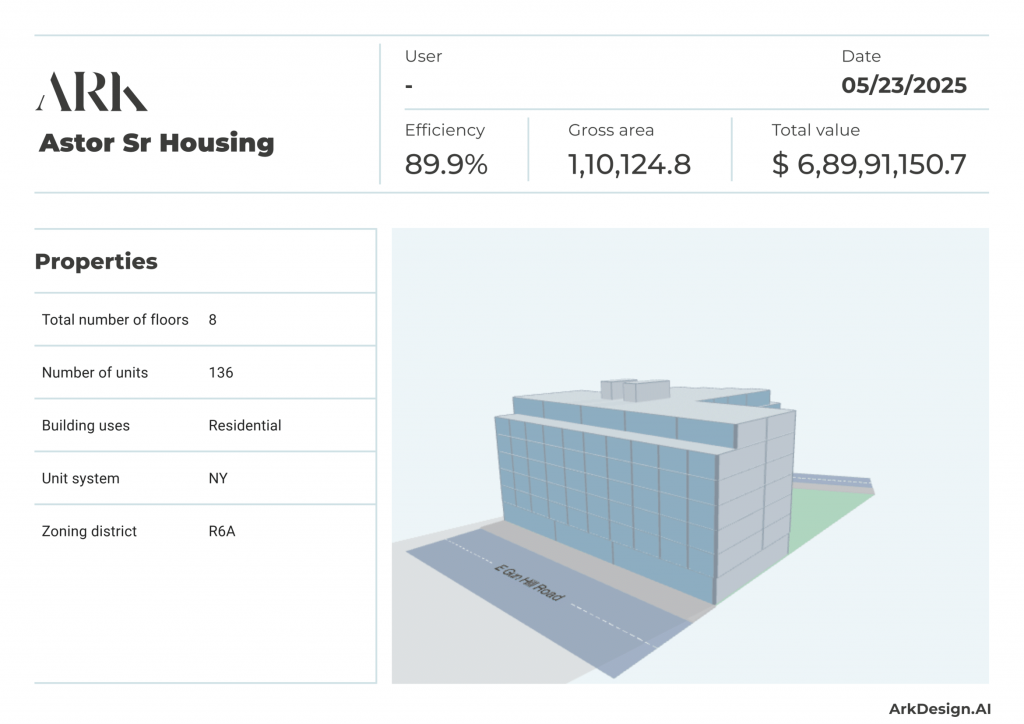
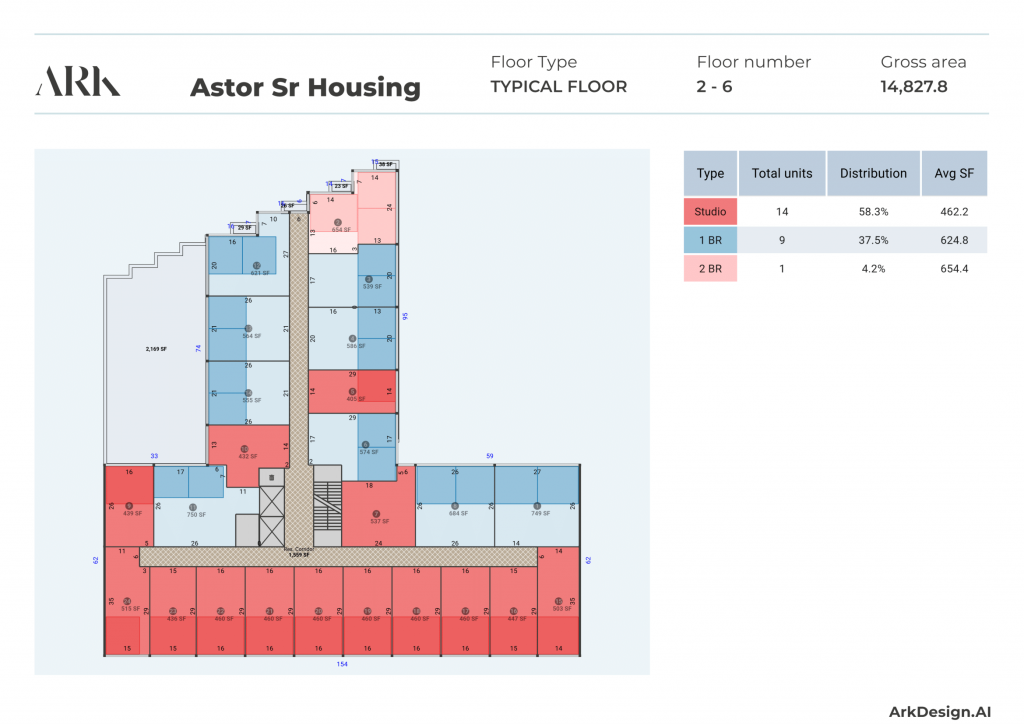
Arkdesign is an AI powered tool for design and feasibility studies. The app is useful to generate architectural concepts for multi-family and mixed-use design projects.
Key features:
- AI-powered design generation
- Profit and density optimization
- Automated code compliance
- Rapid feasibility analysis
- Customizable floor plans
- Schematic 3D views
- User-defined project parameters
- Integrated floor plan editor
- Unit mix planning tools
Best for: Architects, Real Estate Developers and creatives exploring visual ideas.
Website: https://arkdesign.ai/
3. Veras (by EvolveLAB)
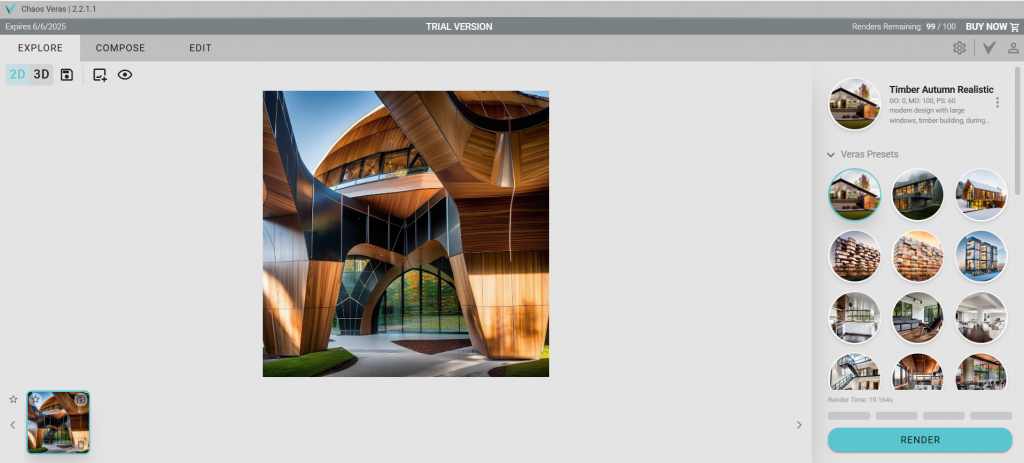
Veras is an AI Image generation app that is used for architectural visualization. The app allows users to create photorealistic scenes from models views using prompt-driven enhancements. It also integrate directly into Revit, Rhino, Vectorworks and Sketchup.
Key features:
- AI-powered rendering inside BIM tools
- Custom prompt inputs for materiality and ambiance
- Fast and iterative design previews
Best for: Designers who want high-quality visuals without relying solely on traditional rendering engines.
Website:https://www.evolvelab.io/veras
4. TestFit
Testfit is a real estate feasibility modeler. The app helps to accelerate designs in early phase. It allows users to generate the building mass together with unit mixing, and parking. Testfit is particularly useful for multifamily housing and mixed-use designs.
Key features:
- Generative design
- Site creation from parcel
- Automatic cut and fill
- Instant cost model & quantity takeoff
- Standard stall parking layout
- Utilities and power data
- Environmental data
- Zoning data
- Unlimited users
Best for: Developers and architects in pre-design and feasibility stages.
Website: https://www.testfit.io/
5. Delve by Sidewalk Labs
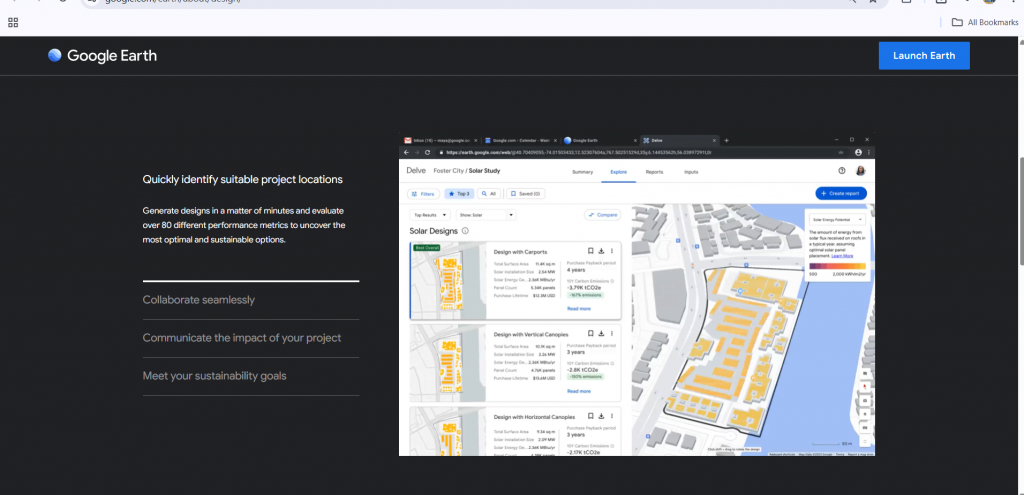
Delve is a generative AI tool that is used to create and evaluate urban masterplans. The apps balances factors such as cost, livability and sustainability to stimulate several scenarios in order to find the most effective land-use strategy.
Key features:
- AI-driven urban planning simulations
- Performance-based design outcomes
- Integration with public and private datasets
Best for: Urban designers and city planners focused on livability and sustainability.
Website: https://www.google.com/earth/about/design/
Please don’t forget to subscribe to our newsletter!
YOU MAY ALSO LIKE TO READ
- A Simple Guide to Runoff ManagementWhether you are working on a small infrastructure project or a large one, rainwater (runoff) is always going to be an issue. That’s why runoff management is a critical part of sustainable land development and environmental protection. As more parts of the world become urbanized and climate patterns continue to… Read more: A Simple Guide to Runoff Management
- A Billion Dollar Problem: What Construction Waste Management Means for the IndustryIt is estimated that nearly 30% of the world’s solid waste comes from construction and demolition (C&D) activities. This includes everything from broken concrete, wood, metal, drywall, bricks, glass, plastics, asphalt, to packaging materials. Most of this waste ends up in landfills, contributing to environmental degradation and increasing costs for… Read more: A Billion Dollar Problem: What Construction Waste Management Means for the Industry
- 5000 Years of Computing: Our Engineering Journey to Quantum ComputingFor over a millennium, human ingenuity has been entwined with the development of tools to aid computation. From the use of the abacus beads to the barely comprehensible entanglement of quantum bits, computing has evolved not only in speed and complexity but also in the way engineers use it to… Read more: 5000 Years of Computing: Our Engineering Journey to Quantum Computing