

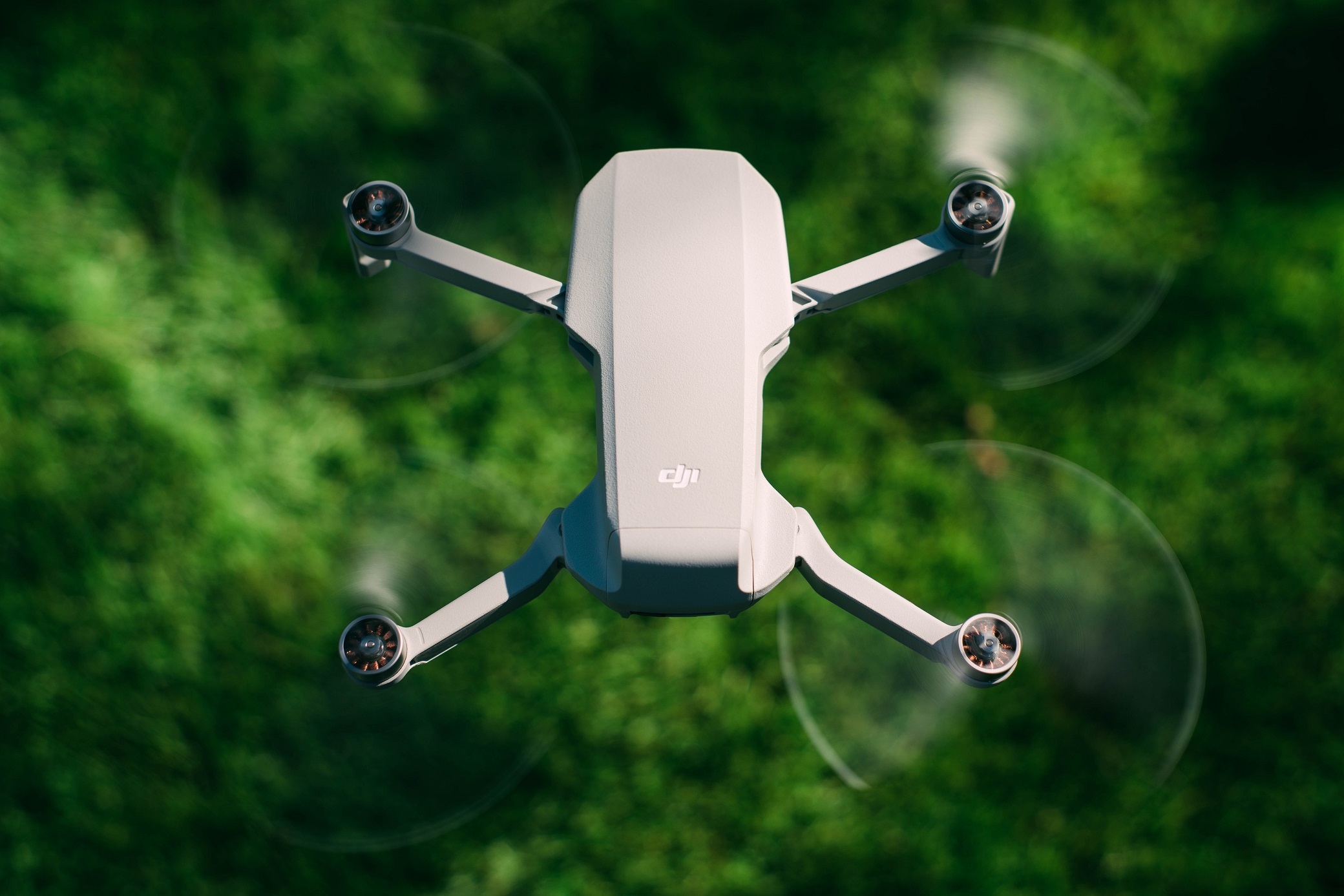
Drones (Unmanned Aerial Vehicles) have several mainstream practical applications. From logistics to surveillance and security, their applications keep on growing. Today, drones even have several applications in the construction which are making them game changers in some projects. Drones have changed the way engineers design, inspect and manage construction projects. Drones can be used to conduct topographic surveys, aerial mapping, site inspections as well as deflection and crack detection.
1. Aerial Mapping and Surveys
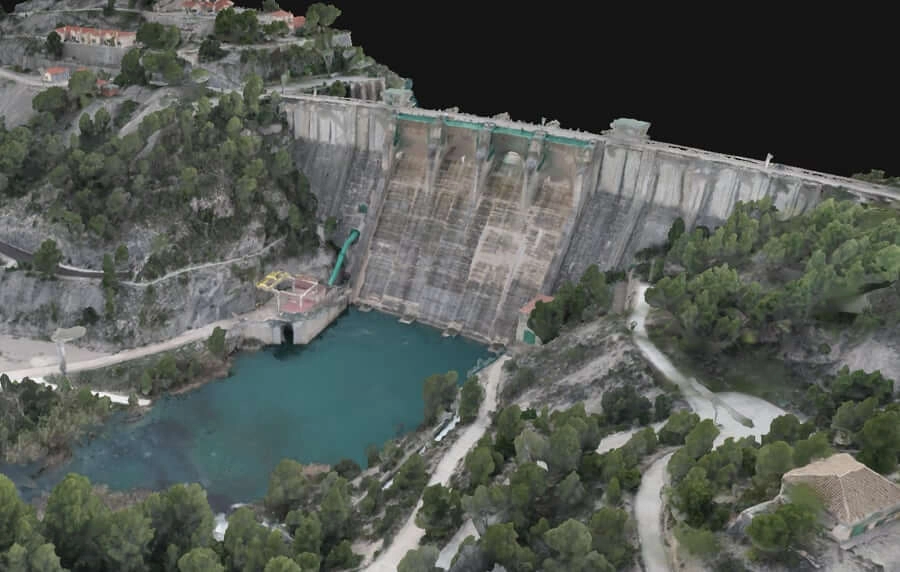
While land surveys can take time, using a drone can reduce on the survey time to minutes. Drones equipped with special sensors and cameras can be used to collect topographical data and images which can be used to generate site topo maps as well as 3D models of sites and buildings.
2. Inspection
Drones provide safety during inspection because they can be flown into hazardous and dangerous conditions. They also solve problems of accessibility especially for points at very tall heights as well as points that are difficult to access like areas under a bridge.

3. Maintenance works
Drones provide a convenient solution to maintenance works. Drones can be equipped with special equipment required for maintenance works such as waterproofing. Using drones also makes the maintenance process safer and economical.
4. Monitoring
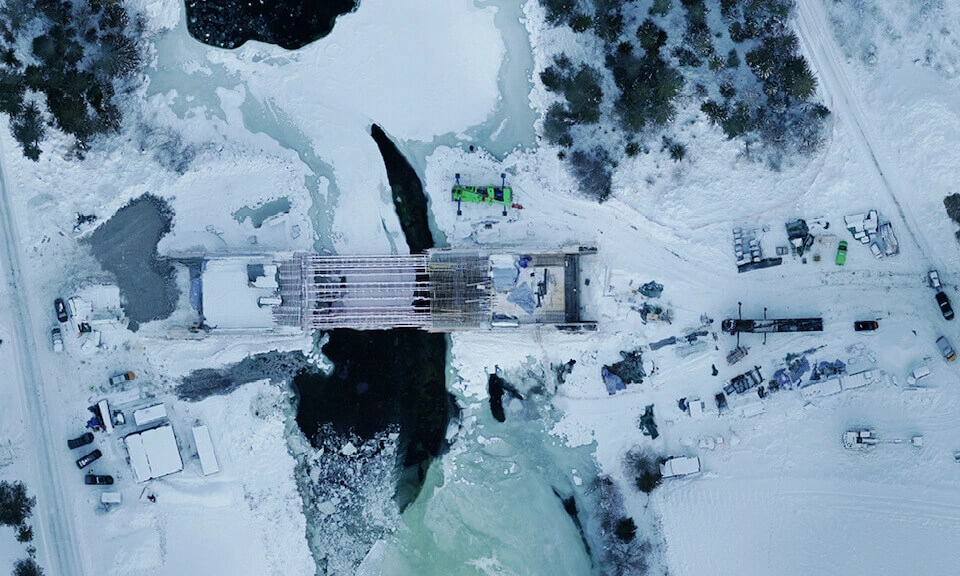
With the use of drones, site monitoring is easier. Drones can be flown over a site, and the physical progress of works can be seen and appreciated. This is can save on time for moving from location to another especially for projects covering as vast area.
5. As-built vs As-Design Visualization
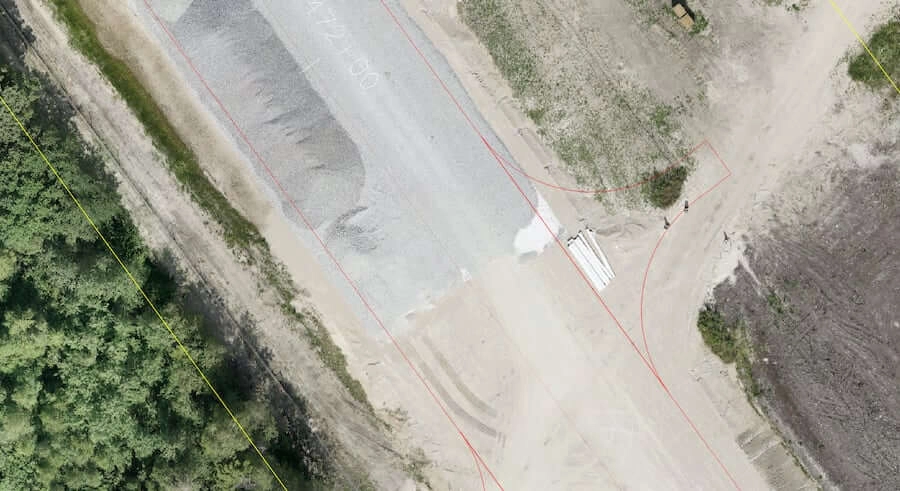
When it comes to as-bult vs as-design comparison, drones provide a cutting edge solution which enables engineers to superimpose the as-design models on to the as-built for better visualization and comparison.
Why you should get a drone for your project?
Its no surprise that drones are gaining traction in construction today. The drones provide a cost effective and time saving solution with an added benefit of safety in otherwise risky areas. They also provide data with great accuracy and resolution which serves well in the planning and design process.
References
Dupont, Q. F., Chua, D. K., Tashrif, A., & Abbott, E. L. (2017). Potential Applications of UAV along the Construction’s Value Chain. Procedia Engineering, 182, 165–173. https://doi.org/10.1016/j.proeng.2017.03.155
Giordan, Daniele & Adams, Marc & Aicardi, Irene & Alicandro, Maria & Allasia, Paolo & Baldo, Marco & Berardinis, Pierluigi & Dominici, Donatella & Godone, Danilo & Hobbs, Peter & Lechner, Veronika & Niedzielski, Tomasz & Piras, Marco & Rotilio, Marianna & Salvini, Riccardo & Segor, Valerio & Sotier, Bernadette & Troilo, Fabrizio. (2020). The use of unmanned aerial vehicles (UAVs) for engineering geology applications. Bulletin of Engineering Geology and the Environment. 79. 10.1007/s10064-020-01766-2.
YOU MAY ALSO LIKE TO READ
- A Simple Guide to Runoff ManagementWhether you are working on a small infrastructure project or a large one, rainwater (runoff) is always going to be an issue. That’s why runoff management is a critical part of sustainable land development and environmental protection. As more parts of the world become urbanized and climate patterns continue to… Read more: A Simple Guide to Runoff Management
- A Billion Dollar Problem: What Construction Waste Management Means for the IndustryIt is estimated that nearly 30% of the world’s solid waste comes from construction and demolition (C&D) activities. This includes everything from broken concrete, wood, metal, drywall, bricks, glass, plastics, asphalt, to packaging materials. Most of this waste ends up in landfills, contributing to environmental degradation and increasing costs for… Read more: A Billion Dollar Problem: What Construction Waste Management Means for the Industry
- 5000 Years of Computing: Our Engineering Journey to Quantum ComputingFor over a millennium, human ingenuity has been entwined with the development of tools to aid computation. From the use of the abacus beads to the barely comprehensible entanglement of quantum bits, computing has evolved not only in speed and complexity but also in the way engineers use it to… Read more: 5000 Years of Computing: Our Engineering Journey to Quantum Computing